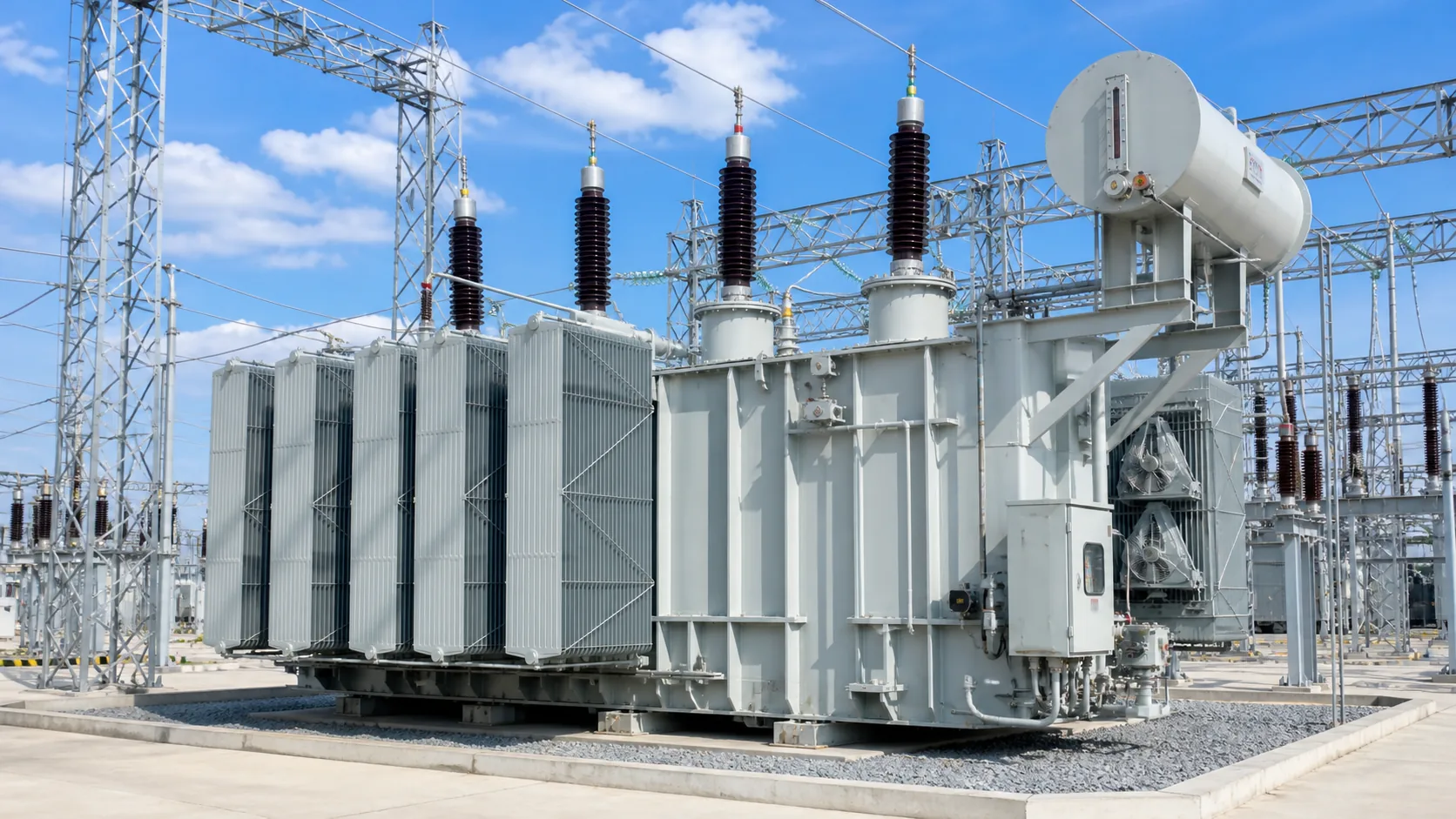
An oil-immersed transformer is one of the most widely used transformer types in power distribution, substations, industrial facilities, renewable energy projects, and utility networks. It uses insulating oil as both an insulation medium and a cooling medium, helping the transformer manage electrical stress and heat during operation.
For buyers, choosing an oil-immersed transformer should not be based only on rated capacity and price. The correct selection depends on voltage level, load profile, cooling method, losses, insulation system, accessories, testing requirements, installation environment, and long-term maintenance conditions.
This buying guide explains the key factors buyers should understand before requesting a quotation or confirming an oil-immersed transformer order.
What Is an Oil-Immersed Transformer?
Basic function
An oil-immersed transformer transfers electrical energy between voltage levels while using transformer oil to insulate internal components and remove heat from the core and windings. The oil circulates inside the tank and transfers heat to radiators or cooling surfaces.
This design is commonly used for medium-voltage and high-voltage applications because it provides strong insulation performance, effective cooling, and reliable long-term operation when properly designed and maintained.
Common applications
Oil-immersed transformers are used in many project types, including utility distribution networks, outdoor substations, industrial plants, mining sites, solar and wind farms, commercial power systems, and infrastructure projects.
They are often selected for outdoor installation, high capacity requirements, and projects where efficiency, thermal performance, and durability are important.
Main advantages
The main advantages of oil-immersed transformers include good cooling capacity, strong overload capability under suitable design conditions, mature manufacturing technology, wide voltage and capacity range, and long service life.
However, buyers should also consider oil containment, fire safety, environmental requirements, maintenance, site conditions, and local regulations.
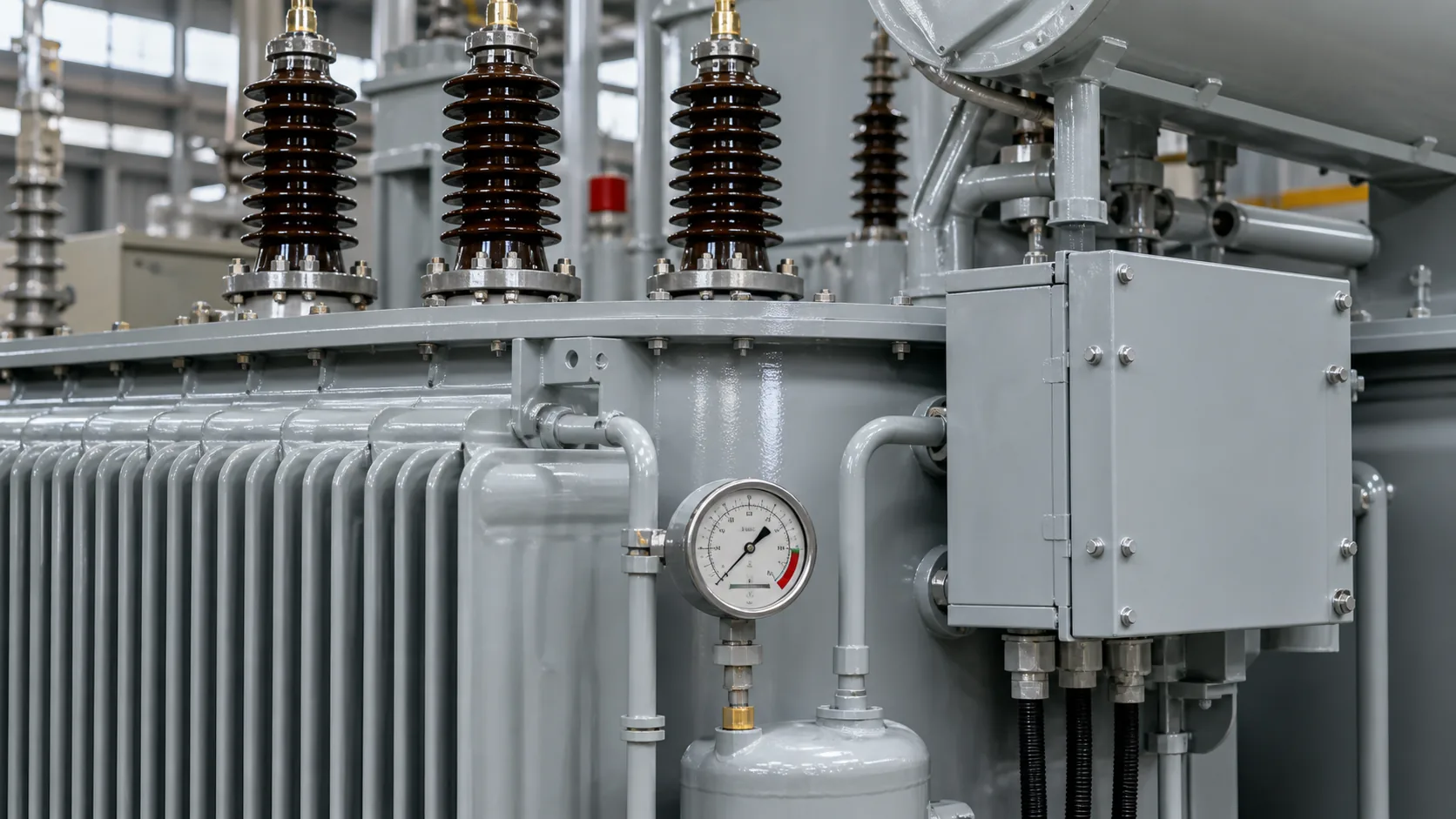
Confirm the Transformer Rating
Rated capacity
Rated capacity is usually expressed in kVA or MVA. Distribution transformers are often rated in kVA, while larger power transformers are commonly rated in MVA.
The correct capacity should be selected based on actual load, peak load, load duration, future expansion, and operating environment. A transformer that is too small may overheat, while a transformer that is too large may increase purchase cost and no-load losses.
Common distribution ratings: 100 kVA, 250 kVA, 500 kVA, 1000 kVA, 1600 kVA, 2500 kVA
Common power transformer ratings: 5 MVA, 10 MVA, 20 MVA, 25 MVA, 40 MVA and above
Project-specific ratings should follow the system design and load study
Voltage ratio
The voltage ratio must match the grid or facility system. Common examples include 11 kV / 0.4 kV, 13.8 kV / 0.48 kV, 22 kV / 0.4 kV, 33 kV / 11 kV, and 110 kV / 33 kV.
Buyers should provide both primary and secondary voltage. If the transformer has multiple windings or special voltage requirements, these should be clearly stated in the RFQ.
Frequency, phase, and vector group
Frequency should be confirmed as 50 Hz or 60 Hz. Phase should be specified as single-phase or three-phase. For most industrial and utility applications, three-phase transformers are used.
Vector group affects grounding, phase displacement, protection coordination, and parallel operation. Common vector groups include Dyn11, Yyn0, YNd11, and other project-specific configurations. If the transformer will operate in parallel with existing equipment, vector group and impedance must be carefully checked.
Choose the Right Cooling Method
ONAN cooling
ONAN means oil natural air natural. In this cooling method, oil circulates naturally inside the transformer tank, and heat is released to the surrounding air through the tank surface and radiators.
ONAN is simple, reliable, and widely used. It has fewer moving parts than forced cooling systems, which can reduce maintenance requirements.
ONAF cooling
ONAF means oil natural air forced. The oil still circulates naturally, but cooling fans force air across radiators to improve heat dissipation.
ONAF can increase the transformer's loading capacity when fans are operating. It is useful when higher capacity is needed without greatly increasing the transformer size. However, it requires fan power, control wiring, inspection, and maintenance.
Selecting cooling stages
Some transformers are specified with multiple ratings, such as ONAN/ONAF. For example, a transformer may have one rating under natural cooling and a higher rating when forced-air cooling is active.
Buyers should confirm whether the project requires a single continuous rating or staged cooling ratings. The load profile, ambient temperature, site ventilation, and maintenance capacity should all be considered.
Understand Transformer Losses
No-load loss
No-load loss occurs when the transformer is energized, even if it is not supplying load. It is mainly related to the transformer core. Since transformers often remain energized for long periods, no-load loss can have a significant impact on lifecycle cost.
For distribution networks with many transformers, reducing no-load loss can be especially important.
Load loss
Load loss occurs when current flows through the windings. It increases with load and is affected by winding material, conductor design, stray losses, and temperature.
If the transformer will operate near rated capacity for long periods, load loss becomes a major factor in operating cost.
Efficiency and total cost
A lower purchase price does not always mean lower total cost. A transformer with higher losses may cost more over its service life due to energy loss.
Buyers should compare transformer price together with no-load loss, load loss, expected operating hours, electricity cost, and project efficiency requirements.
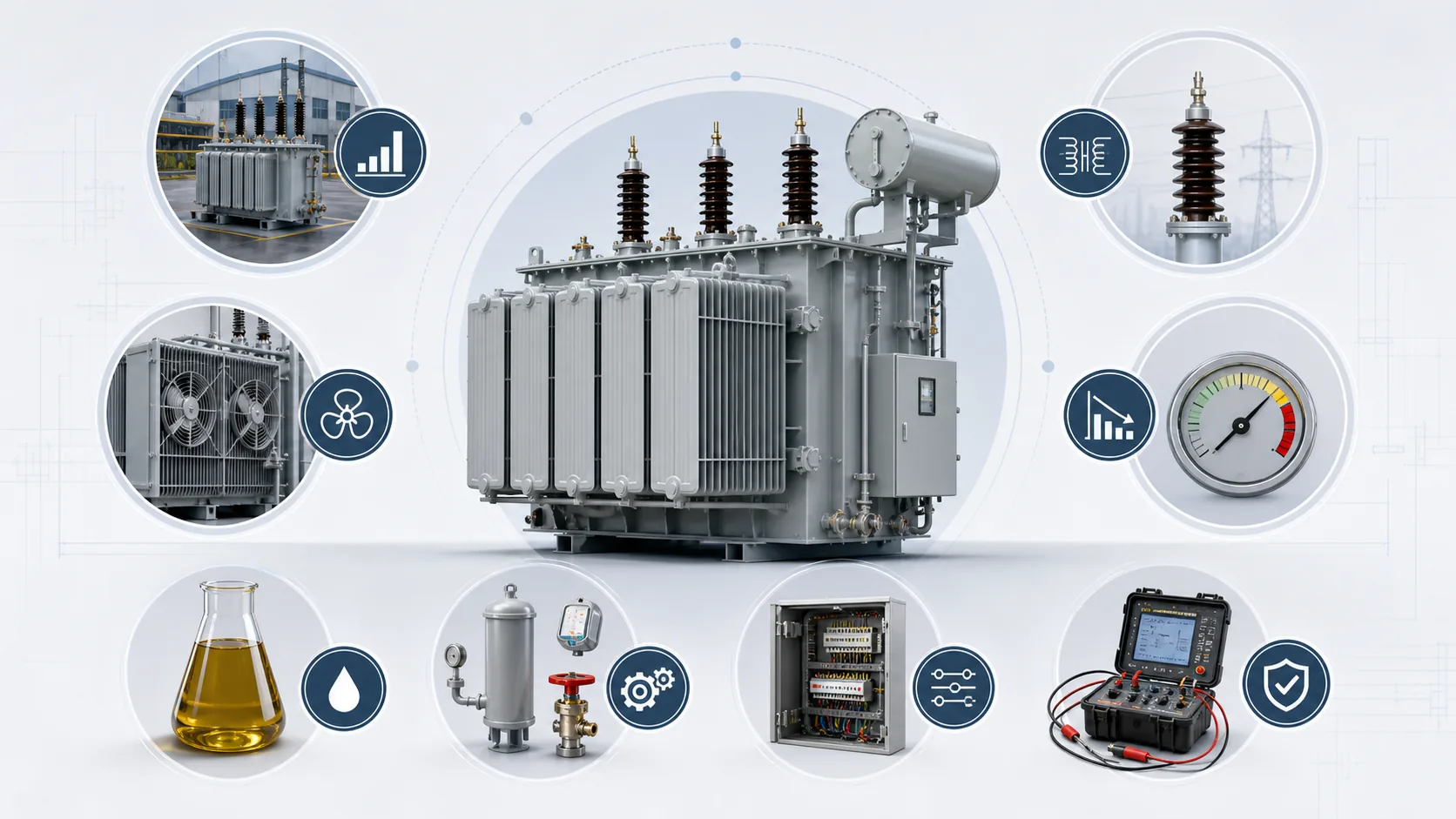
Check Insulation Oil, Tank, and Accessories
Transformer oil
Transformer oil provides insulation and cooling. Buyers should confirm the oil type, oil quality requirements, and any local environmental or fire safety restrictions.
Mineral oil is widely used, while ester fluids may be considered in projects with higher fire safety or environmental requirements. The final choice should follow project specifications and local regulations.
Tank and radiator design
The transformer tank must be mechanically strong, properly sealed, and suitable for the installation environment. Radiators should provide adequate cooling performance and allow maintenance access.
For coastal, chemical, mining, or high-pollution environments, coating and corrosion protection should be discussed before quotation.
Common accessories
Oil-immersed transformers may require different accessories depending on capacity, voltage level, and project specification.
Oil level indicator
Oil temperature indicator
Winding temperature indicator
Buchholz relay
Pressure relief device
Dehydrating breather
Conservator
Radiators
Drain valve and oil sampling valve
Earthing terminals
Cable box or bushings
Marshalling box
Cooling fan control system
Confirm Testing and Quality Requirements
Routine tests
Routine tests are normally performed on each transformer before delivery. They help verify that the transformer meets basic electrical and quality requirements.
Typical routine tests may include winding resistance measurement, voltage ratio measurement, impedance and load loss measurement, no-load loss and no-load current measurement, insulation resistance test, and dielectric tests.
Type tests and special tests
Some projects require type tests or special tests, such as temperature rise test, lightning impulse test, sound level measurement, partial discharge measurement, or other project-specific tests.
These tests may affect cost and delivery time. Buyers should confirm the required test scope before order confirmation.
Factory acceptance test
For important projects, buyers may request factory acceptance testing. The buyer, consultant, or third-party inspector may witness selected tests before shipment.
If inspection is required, the inspection plan, witness points, document requirements, and acceptance criteria should be agreed in advance.
Buyer RFQ Checklist
Before requesting a quotation for an oil-immersed transformer, prepare the following information:
Transformer application
Rated capacity
Primary voltage and secondary voltage
Frequency and phase
Vector group
Impedance requirement
Tap changer type and tap range
Cooling method
Oil type or fluid requirement
Indoor or outdoor installation
Ambient temperature and altitude
Environmental conditions
Applicable standard
Required accessories
Testing requirements
Factory acceptance test requirement
Documentation requirements
Destination country or port
Required delivery schedule
If some parameters are not confirmed, mark them as to be confirmed and explain the application. This allows the supplier to provide a more useful technical recommendation.
FAQ
a. What is an oil-immersed transformer?
An oil-immersed transformer is a transformer that uses insulating oil for electrical insulation and heat dissipation. It is widely used in distribution networks, substations, industrial facilities, and renewable energy projects.
b. What is the difference between ONAN and ONAF cooling?
ONAN uses natural oil and natural air circulation. ONAF uses natural oil circulation with forced air cooling fans, allowing higher loading capacity when fans are operating.
c. Why are transformer losses important?
Transformer losses affect long-term operating cost. No-load loss occurs whenever the transformer is energized, while load loss increases with current and load level.
d. What information is needed for an oil-immersed transformer quotation?
Buyers should provide capacity, voltage ratio, frequency, phase, vector group, impedance, cooling method, oil requirement, site conditions, accessories, testing requirements, and delivery destination.
e. Can oil-immersed transformers be used indoors?
They can be used indoors only when the installation room, fire safety measures, ventilation, oil containment, and local regulations allow it. Many indoor projects may prefer dry-type transformers.
f. Should I choose mineral oil or ester fluid?
Mineral oil is widely used and cost-effective. Ester fluid may be selected for projects with higher fire safety or environmental requirements. The choice should follow project specifications and local rules.