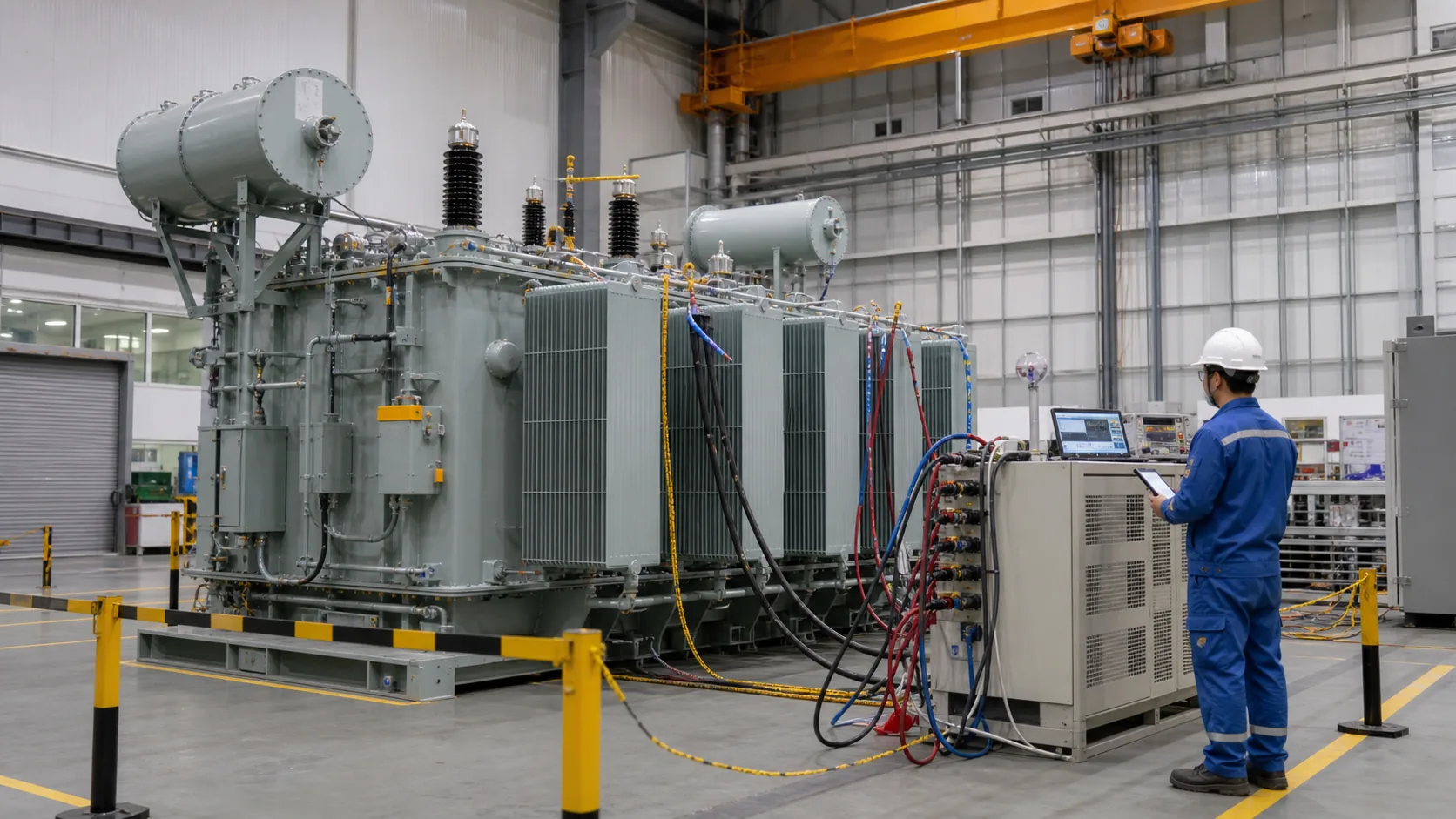
Transformer FAT, or factory acceptance testing, is one of the most useful controls in a transformer procurement project. It gives the buyer a structured opportunity to verify the finished unit, the agreed test scope, and the release documentation before the transformer is packed and shipped. The value comes from specifying the test plan early and reviewing the evidence carefully, rather than treating FAT as a simple pass-or-fail event.
Why Transformer FAT Matters
FAT is a shipment-release milestone
Factory acceptance testing, usually called FAT, is the final structured check completed at the transformer manufacturer's works before a unit is released for shipment. It confirms that the finished transformer matches the agreed electrical design, nameplate data, applicable standards, and contractual test scope. For buyers, FAT is not merely a factory visit. It is the point at which the project team should decide whether the unit and its documentation are ready to leave the factory.
FAT does not replace site commissioning
A successful FAT does not prove that the transformer will operate correctly after transport, installation, cable connection, protection setting, and energization at site. Site acceptance tests and commissioning remain necessary. FAT reduces risk earlier in the process by finding manufacturing, assembly, configuration, or documentation problems while they can still be corrected at the factory.
Routine Tests, Type Tests, and Special Tests
Routine tests
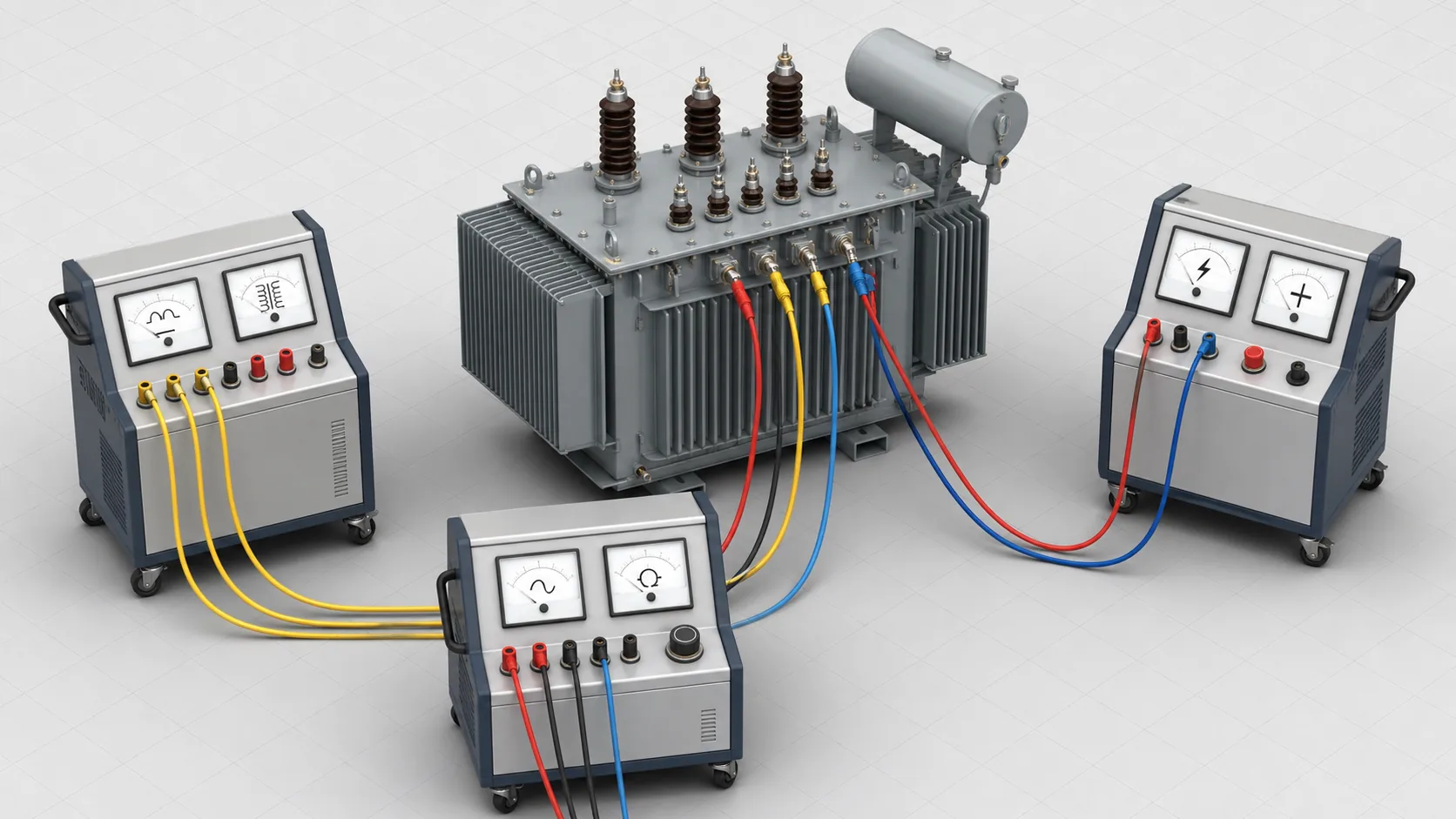
Routine tests are performed on each transformer before shipment. Their purpose is to verify that the individual unit has been manufactured and assembled correctly. The exact list depends on the transformer design and standard, but it commonly covers items such as winding resistance, voltage ratio, vector group, impedance, losses, dielectric withstand, and functional checks of fitted accessories.
Type tests
Type tests demonstrate that a transformer design or design family can meet specified performance requirements. They are normally completed on a representative unit rather than repeated on every transformer. Buyers should ask for valid reports that match the relevant design, rating range, insulation system, cooling arrangement, and standard. A type-test report from an unrelated design is not the same as evidence for the proposed transformer.
Special tests
Special tests are additional tests requested for a particular project, customer specification, grid requirement, or operating risk. Examples may include sound level measurement, zero-sequence impedance, short-circuit withstand evidence, frequency response analysis, dissolved gas testing for oil-filled units, or a specific lightning impulse test. These should be agreed in the technical schedule and quotation stage because they can affect design, test equipment, lead time, and cost.
Routine Tests Buyers Commonly See at FAT
Electrical ratio and connection checks
Transformer ratio testing confirms that the voltage transformation ratio is correct at each tap position. Vector-group or phase-displacement checks confirm that the winding connections match the agreed system arrangement. Winding resistance testing helps identify issues with winding joints, tap connections, and current paths. Buyers should compare the recorded values with the approved drawings, guaranteed data, and applicable test tolerances.
Loss, impedance, and resistance checks
No-load loss and load loss results are important because they affect lifetime energy cost. Impedance voltage affects voltage regulation and short-circuit behavior in the network. These values should be checked against the contract guarantees and the project system study, not simply marked as pass or fail. A buyer should also confirm the reference temperature used for reported load loss and resistance values.
Dielectric and condition checks
Applied-voltage and induced-voltage withstand tests verify insulation performance under the specified test conditions. Oil-filled transformers may also require checks for oil condition, leak tightness, pressure, oil level, and operation of relevant accessories. The exact dielectric test sequence and test levels must follow the agreed standard and insulation level. The FAT record should state the test method, duration where applicable, and the result.
How to Specify FAT in the Purchase Order

Standards and acceptance criteria
State the governing standard and the project-specific additions in the purchase order or approved technical schedule. Specify the required routine, type, and special tests; the exact guaranteed losses, impedance, sound level, and other values; and the permissible tolerances. If the project uses IEC, IEEE, or a local utility standard, identify the edition and any priority order where documents conflict.
Witness arrangements and records
If a buyer, consultant, or third-party inspector will witness FAT, state the notice period, expected duration, language of the reports, and whether remote witnessing is acceptable. Request a test agenda in advance. The final package should include signed test reports, nameplate information, approved drawings, calibration evidence where required, inspection records, packing details, and a clear record of any deviations or concessions.
Nonconformities and retesting
The contract should define what happens if a result is outside the agreed acceptance criteria. Useful controls include written notification, root-cause analysis, corrective-action approval, retesting requirements, and a rule that shipment cannot proceed until the buyer or appointed inspector accepts the resolution. Avoid vague wording such as 'tests as per manufacturer standard' when the project has specific performance guarantees.
Buyer Checklist Before Shipment Release
Before FAT
Confirm the approved technical specification, nameplate, drawings, test schedule, witness date, and acceptance criteria. Check that special-test requirements have not been lost between the quotation, order confirmation, and production stages. Ask for the serial number and the latest factory inspection status before arranging travel or remote witnessing.
During FAT
Match the transformer serial number and nameplate data to the purchase order. Follow the agreed test sequence, review readings and test conditions, and ask questions where values differ from the guarantee or previous documentation. Make sure that any rework, retest, or observation is recorded in writing. A witness should verify the evidence, not interfere with the factory's safe test procedures.
Before authorizing shipment
Review the complete test dossier, final drawings, photographs, accessory list, spare-parts list, packing plan, and transport dimensions. Confirm that open points are closed and that the final report identifies the same transformer that will be packed. FAT approval should be one of the conditions for shipment release, alongside commercial, inspection, and logistics checks.
FAQ
Is FAT required for every transformer?
Routine factory tests are normally performed on every transformer before shipment. Whether a customer attends or formally witnesses FAT depends on the contract, project risk, rating, and customer requirements.
What is the difference between FAT and a type test?
FAT focuses on the individual transformer being supplied. A type test normally demonstrates the capability of a representative design and may be presented as a report rather than repeated on every unit.
Can I witness transformer FAT remotely?
Many factories can support remote witnessing with a live video connection, test agenda, and digital reports. Confirm the method, camera coverage, language, and document-signing process before production is complete.
Should I ask for all possible special tests?
No. Select special tests based on the project standard, grid requirements, operating conditions, and risk. Unnecessary tests can add cost and time without improving the decision.
What documents should be included in a FAT package?
At minimum, request final test reports, nameplate data, approved drawings, inspection records, accessory information, and a record of any deviations. Projects may also need calibration records, quality documents, packing details, and certificates of conformity.
What happens if a FAT result is outside the guarantee?
The supplier should investigate the cause, propose corrective action, and repeat the affected test where appropriate. The outcome and acceptance decision should be documented before shipment is released.
Does FAT confirm transport readiness?
Not by itself. FAT confirms test results, while transport readiness also depends on packing, moisture protection, accessory packing, lifting points, dimensions, weights, and shipping documentation.
Can a transformer pass FAT and still fail at site?
Yes. Transport damage, incorrect installation, unsuitable protection settings, poor connections, or site conditions can still create problems. FAT and site commissioning are complementary controls.